
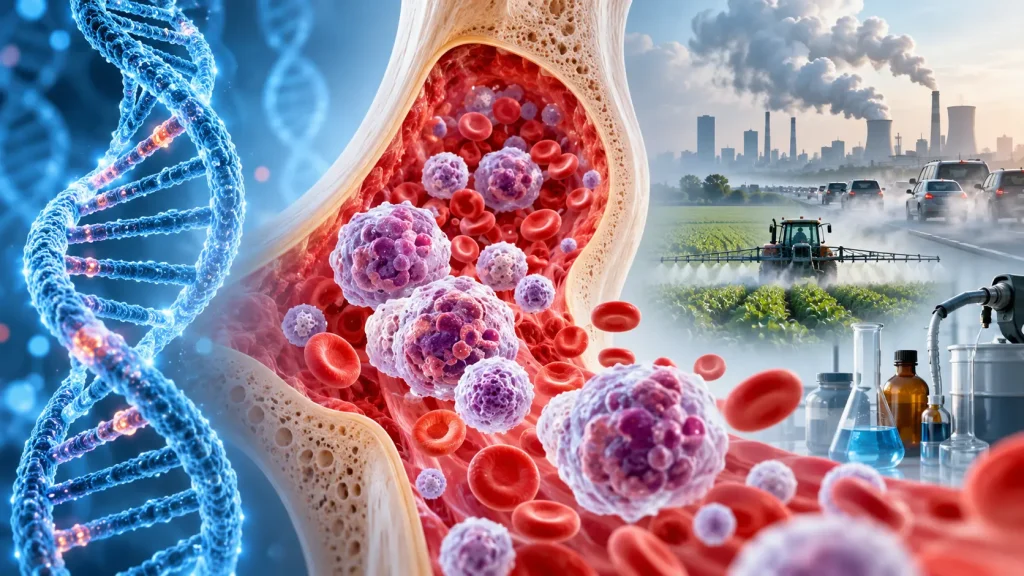
Leukemia is not always inherited.
Understanding what causes leukemia, why environmental exposure matters, and how paying attention to our health can make a difference.
When we hear the word leukemia, we often think of a serious blood cancer, and one of the first questions that comes to mind is whether it runs in families. Many people assume that developing cancer is largely a matter of genetics, something determined by the DNA we inherit from our parents.
But the reality is more complicated.
Most cases of leukemia are not inherited. Although genetic changes are central to how leukemia develops, many of these changes occur during our lifetime. Aging, certain chemical exposures, radiation, and other environmental influences can contribute to the development of the disease.
This raises an important question: how much do we really know about the substances we encounter every day, in our workplaces, in the air we breathe, and in our surrounding environment?
Understanding these risks matters because some are preventable. Equally important is knowing when a change in our health deserves medical attention.
What exactly is leukemia?
Inside our bones is a soft tissue called bone marrow, where millions of new blood cells are produced every day. These cells have essential responsibilities. Red blood cells carry oxygen, white blood cells protect us against infections, and platelets help stop bleeding.
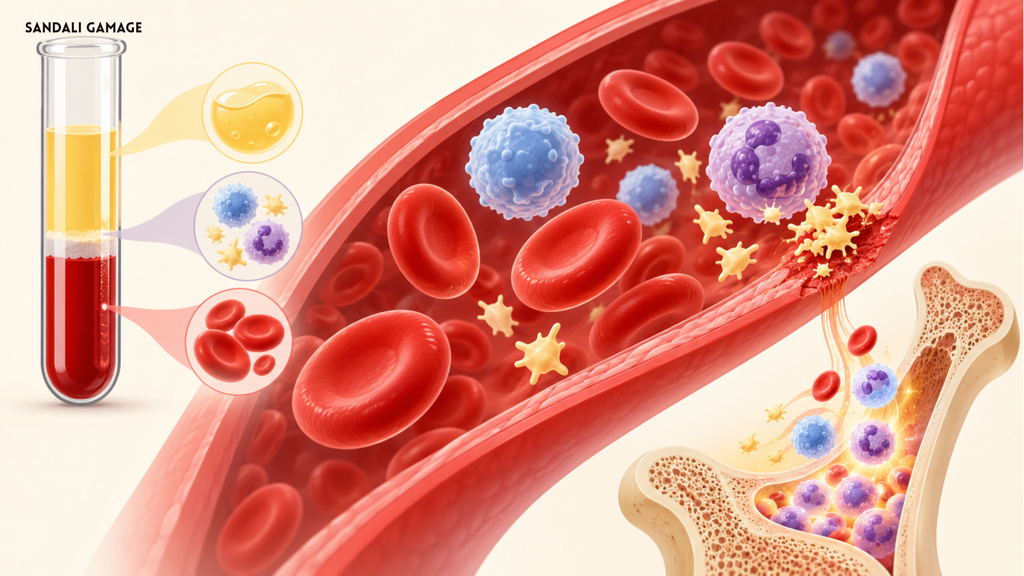
Leukemia develops when certain blood-forming cells become abnormal and begin multiplying uncontrollably. Over time, these abnormal cells can interfere with the production and function of healthy blood cells.
This explains why people with leukemia may experience unusual tiredness, repeated infections, pale skin, or unexplained bruising and bleeding.
However, leukemia does not behave the same way in everyone. Some forms develop rapidly, while others progress slowly and may remain unnoticed for a considerable period [1].
Not all leukemias are the same
Leukemia is broadly classified into four major types, according to the affected blood-cell lineage and how quickly the disease progresses.
Acute Lymphoblastic Leukemia (ALL) is a rapidly progressing leukemia that affects immature lymphoid cells. It is the most common type of leukemia in children, although adults can also develop it.
Acute Myeloid Leukemia (AML) affects immature myeloid blood-forming cells and generally progresses quickly. It occurs more frequently in adults, particularly older individuals.
Chronic Lymphocytic Leukemia (CLL) usually progresses more slowly and primarily affects older adults. Some individuals remain symptom-free for years.
Chronic Myeloid Leukemia (CML) often develops gradually during its initial phase and is associated with an acquired genetic abnormality involving the Philadelphia chromosome.
These differences are important. Acute leukemias usually require urgent treatment, whereas some chronic leukemias may initially need careful observation rather than immediate therapy [1].
Does having leukemia mean you inherited faulty genes?
Not necessarily.
One of the most important things to understand about leukemia is the difference between a disease being genetic and being hereditary.
A genetic disease involves changes in DNA. A hereditary disease involves genetic changes passed from parents to children.
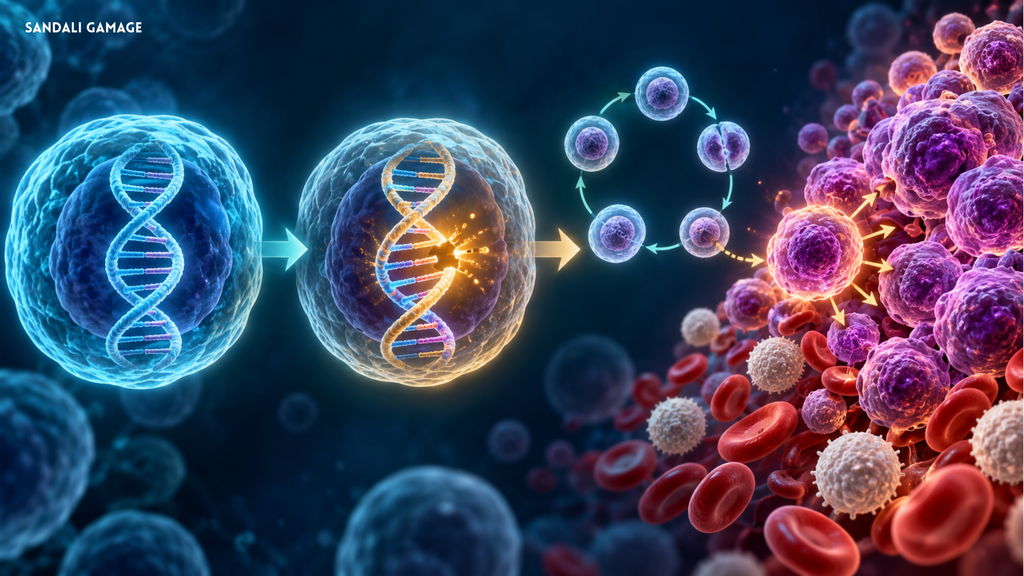
Leukemia develops because genetic abnormalities disrupt how blood cells grow, divide, and survive. However, these abnormalities are generally acquired during life rather than inherited.
Sometimes DNA changes happen spontaneously as cells divide. Others may be influenced by aging or exposure to carcinogens, substances capable of contributing to cancer development [2].
A small proportion of cases are associated with inherited genetic predisposition syndromes, but these do not explain most leukemias.
Importantly, having an acquired genetic change does not automatically mean that an environmental chemical caused it. In many patients, the precise origin of leukemia remains unknown.
So, while leukemia involves genetic changes, we should not overlook the potential contribution of the environment in which we live and work.
Environmental exposures: an important part of the leukemia story
We are surrounded by chemicals, both natural and manufactured. Some are harmless at ordinary exposure levels, while others can damage our health under particular conditions.
Scientists have identified several environmental and occupational exposures associated with leukemia. However, the strength of evidence is not the same for every substance.
1. Benzene: one of the clearest environmental risk factors
Benzene is a chemical found in petroleum products, petrol fumes, cigarette smoke, and certain industrial processes.
People working in petroleum-related industries, rubber manufacturing, chemical production, printing, and some other occupations may experience elevated exposure, depending on their working conditions.
Long-term exposure to benzene is an established risk factor for leukemia, particularly acute myeloid leukemia [3,4].
The concern is not simply that benzene exists in the environment. The amount of exposure, its duration, and the effectiveness of workplace safety measures all influence the potential risk.
This is why chemical safety regulations, ventilation systems, and safer industrial practices are essential public-health measures.
2. Formaldehyde: a concern beyond industrial factories
Formaldehyde is widely used in laboratories, medical tissue preservation, manufacturing, and certain building materials.
Laboratory personnel, healthcare workers handling preserved tissues, industrial workers, and mortuary employees may encounter formaldehyde in their working environments.
The National Cancer Institute identifies formaldehyde as a human carcinogen and reports evidence connecting substantial occupational exposure with myeloid leukemia [5].
This does not mean that every person encountering a formaldehyde-containing product is at high risk. Exposure intensity, duration, and protective measures matter.
Nevertheless, the evidence highlights why proper ventilation, safer handling procedures, and occupational exposure controls should never be treated as optional.
3. Pesticides and agricultural chemicals: an area deserving greater attention
Agricultural chemicals have helped improve crop production and manage pests. However, concerns remain about the potential long-term health effects of exposure to certain pesticides.
Farmers, agricultural workers, pesticide applicators, and families living or working near pesticide-use areas may encounter these chemicals through different exposure pathways.
A systematic review and meta-analysis published in Environmental Pollution in 2021 examined 55 studies involving more than 160,000 participants. The researchers identified associations between pesticide exposure and childhood leukemia, with particularly notable findings for maternal exposure during pregnancy [6].
These findings are important, but they should be interpreted carefully.
Pesticides are a diverse group of chemicals, and their potential health effects differ. Observational associations do not prove that all pesticides cause leukemia, nor do they establish the cause of an individual case.
Nevertheless, the findings support the importance of minimizing unnecessary exposure, especially among pregnant women, children, and agricultural workers.
4. Air pollution: could the air around us contribute?
Air pollution is another important area of ongoing research.
Vehicle exhaust, industrial emissions, and other pollution sources may contain potentially harmful substances, including benzene and fine particulate matter.
A systematic review and meta-analysis published in Environmental Research in 2026 examined associations between traffic-related air pollution and childhood cancers.
The researchers reported associations between exposure to certain traffic-related pollutants and childhood leukemia, including findings involving fine particulate matter and acute lymphoblastic leukemia [7].
While these findings add to the growing body of evidence, they do not establish that air pollution is responsible for every associated case. Further research is needed to clarify the effects of individual pollutants and exposure periods.
Even so, they remind us that environmental health is not limited to individual choices. Clean air, effective industrial regulation, and responsible urban planning are also important components of disease prevention.
5. Ionizing radiation and previous cancer treatment
Exposure to high doses of ionizing radiation is another established leukemia risk factor.
Radiation therapy and certain chemotherapy medicines used to treat one cancer can occasionally increase the risk of developing a second cancer, including leukemia, later in life [3].
This should not discourage patients from receiving medically necessary cancer treatment. The benefits of appropriate treatment generally outweigh these potential long-term risks.
Similarly, ordinary diagnostic imaging should not be equated with high-dose radiation exposure. Imaging examinations should be performed when medically justified, with radiation exposure kept as low as reasonably achievable.
Other recognized factors include cigarette smoking, increasing age, certain bone marrow disorders, and a small number of inherited predisposition syndromes.
It is also important to remember that having a risk factor does not mean someone will inevitably develop leukemia. Many people exposed to these factors never develop the disease, while others are diagnosed without any identifiable exposure history.
Why regular health checkups matter, even when we feel healthy
We often seek medical care only when something feels wrong.
But not every disease announces itself through noticeable symptoms.
Certain chronic leukemias, particularly CLL and CML, may develop gradually. A person can feel completely healthy while abnormal blood cells are accumulating.
In some cases, the first indication is an unexpected finding in a blood test performed during a medical examination or for another health concern [8,9].
One commonly used investigation is the Complete Blood Count (CBC), also known as the Full Blood Count (FBC).
This relatively simple test measures several important blood components:
- Red blood cells and hemoglobin, which help identify anemia.
- White blood cells and their different types, which can reveal unusual changes.
- Platelets, which are involved in normal blood clotting.
Abnormal findings may prompt further evaluation, including examination of blood cells under a microscope, flow cytometry, bone marrow investigations, or specialized genetic and molecular testing [10].
However, one important point must be made clear.
A CBC is not a guaranteed method of detecting early leukemia, and there is no universally recommended leukemia screening program for healthy people without symptoms.
Although some leukemias are discovered incidentally, repeated CBC testing of every healthy person has not been shown to improve leukemia outcomes. A normal blood count cannot exclude every early leukemia, and an abnormal result can have many causes other than cancer [8,9,11].
Therefore, the purpose of regular healthcare should not be to search anxiously for every possible hidden disease. It should be to understand our individual risk factors, discuss persistent symptoms, receive appropriate preventive care, and undergo investigations when medically indicated.
For individuals with significant occupational exposures, previous cancer treatment, or certain inherited predispositions, clinicians may recommend more individualized monitoring.
What warning signs should we pay attention to?
Leukemia symptoms can sometimes resemble common illnesses, making them easy to overlook.
Persistent tiredness may be attributed to working long hours. Repeated infections may seem like seasonal illnesses. Bruising may appear unimportant.
Most of the time, such symptoms are caused by conditions other than leukemia. However, medical evaluation is important when symptoms are persistent, unexplained, unusual, or worsening.
Warning signs may include:
- Persistent fatigue or unusual weakness
- Unexplained or recurring fever
- Frequent or prolonged infections
- Unusual bruising, bleeding gums, or nosebleeds
- Drenching night sweats
- Unintentional weight loss
- Bone or joint pain
- Persistently enlarged lymph nodes
Severe bleeding, a serious infection, or sudden marked weakness requires urgent medical attention [1].
The message is not that every symptom indicates cancer. It is that unexplained changes in our health deserve attention rather than prolonged neglect.
What can we actually do to reduce our risk?
We cannot prevent every case of leukemia. Some genetic changes arise without any known external cause, and many risk factors are beyond an individual’s control.
However, reducing exposure to established carcinogens remains an important preventive measure.
At workplaces, the most effective strategy is to remove hazardous substances where possible or replace them with safer alternatives. Proper ventilation, enclosed chemical-handling systems, safe storage, worker education, and suitable protective equipment can further reduce exposure [12].
At an individual level, avoiding tobacco smoke, reducing unnecessary contact with petrol fumes and solvents, and following pesticide safety instructions are sensible protective practices.
People who work regularly with potentially hazardous chemicals should also be encouraged to discuss their exposure history with occupational-health professionals or their doctors.
These measures are not a guarantee against leukemia. They are practical ways of reducing avoidable risks and protecting health more broadly.
A final thought: prevention is bigger than genetics
For a long time, conversations about cancer have focused heavily on family history and inherited genes.
Genetics certainly matters. But genetics alone cannot explain why every person develops leukemia.
Our environment, occupational conditions, personal exposures, age, and acquired changes in our cells can also shape disease risk.
At the same time, we must avoid creating unnecessary fear. Scientific evidence does not support blaming every leukemia diagnosis on pollution, pesticides, or a particular workplace. For many patients, the cause remains unknown.
What we can do is use the available evidence responsibly.
We can make workplaces safer. We can reduce unnecessary exposure to harmful chemicals. We can support cleaner environments. We can seek medical advice when symptoms persist and take part in preventive healthcare appropriate to our personal circumstances.
Because protecting our health is not only about treating disease after it appears. It is also about understanding the risks around us, reducing those we can control, and recognizing when our bodies may be telling us that something needs attention.
And sometimes, paying attention at the right moment can make an important difference.
References
[1] American Cancer Society. Leukemia. Updated September 9, 2026.
https://www.cancer.org/cancer/types/leukemia.html
[2] National Cancer Institute. What Is Cancer? National Institutes of Health.
https://www.cancer.gov/about-cancer/understanding/what-is-cancer
[3] American Cancer Society. Risk Factors for Acute Myeloid Leukemia (AML).
https://www.cancer.org/cancer/types/acute-myeloid-leukemia/causes-risks-prevention/risk-factors.html
[4] National Cancer Institute. Benzene: Cancer-Causing Substances. Reviewed August 6, 2024.
https://www.cancer.gov/about-cancer/causes-prevention/risk/substances/benzene
[5] National Cancer Institute. Formaldehyde: Cancer-Causing Substances. Updated August 6, 2024.
https://www.cancer.gov/about-cancer/causes-prevention/risk/substances/formaldehyde
[6] Karalexi MA, Tagkas CF, Markozannes G, et al. Exposure to pesticides and childhood leukemia risk: A systematic review and meta-analysis. Environmental Pollution. 2021;285:117376.
https://doi.org/10.1016/j.envpol.2021.117376
[7] Oh J, Shah S, Min J, et al. Prenatal and postnatal exposure to traffic-related air pollution (TRAP) and childhood cancer: Systematic review and meta-analysis. Environmental Research. 2026;292:123646.
https://doi.org/10.1016/j.envres.2025.123646
[8] American Cancer Society. Can Chronic Lymphocytic Leukemia (CLL) Be Found Early? Updated March 20, 2025.
https://www.cancer.org/cancer/types/chronic-lymphocytic-leukemia/detection-diagnosis-staging/detection.html
[9] American Cancer Society. Can Chronic Myeloid Leukemia (CML) Be Found Early? Updated June 16, 2025.
https://www.cancer.org/cancer/types/chronic-myeloid-leukemia/detection-diagnosis-staging/detection.html
[10] American Cancer Society. Tests for Chronic Lymphocytic Leukemia (CLL).
https://www.cancer.org/cancer/types/chronic-lymphocytic-leukemia/detection-diagnosis-staging/how-diagnosed.html
[11] American Cancer Society. Can Acute Lymphocytic Leukemia Be Found Early?
https://www.cancer.org/cancer/types/acute-lymphocytic-leukemia/detection-diagnosis-staging/detection.html
[12] Centers for Disease Control and Prevention, National Institute for Occupational Safety and Health. Hierarchy of Controls. April 10, 2024.
https://www.cdc.gov/niosh/hierarchy-of-controls/about/index.html
Medical disclaimer: This article is intended for public health education and general awareness. It does not replace individualized medical advice, diagnosis, or treatment. Anyone experiencing persistent unexplained symptoms or concerned about occupational exposure should consult an appropriately qualified healthcare professional.