
By Sandali Gamage, BPharm
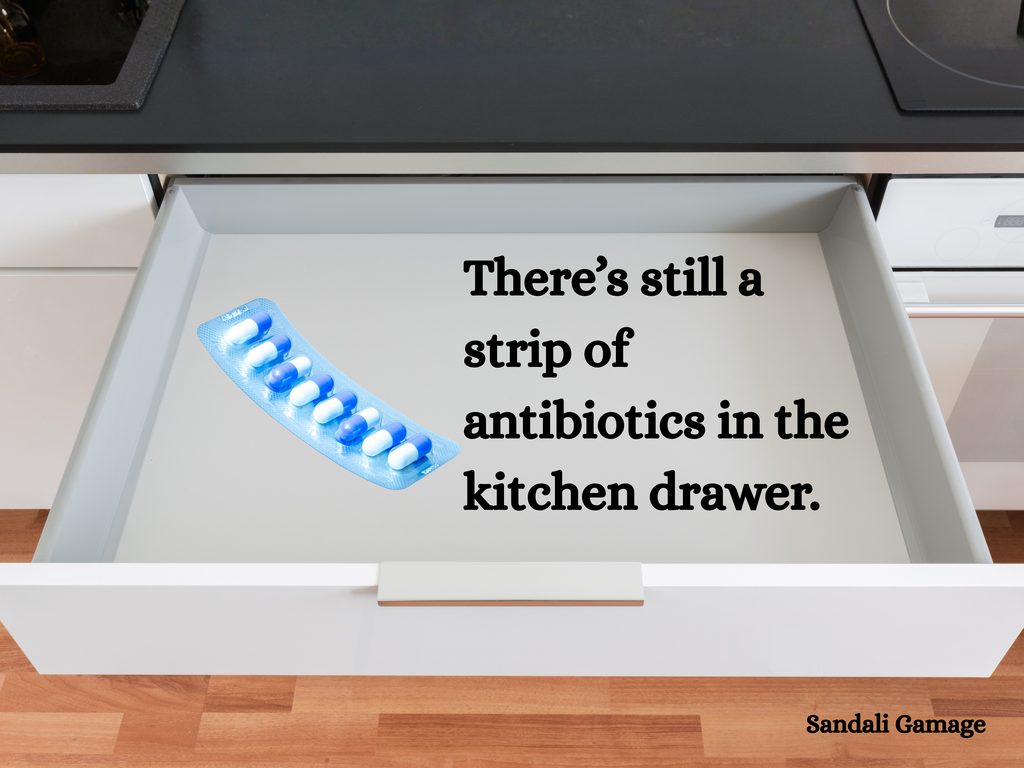
You wake up with a sore throat. Swallowing your morning tea hurts, and you remember feeling just like this a few months ago. There’s still a strip of antibiotics in the kitchen drawer. Last time, you took those tablets and felt better in a few days. It’s tempting to reach for them again.
As a pharmacist, I understand the appeal. You want to feel well enough to get through the day, and the name on the packet is familiar. But two sore throats can feel exactly alike and have different causes. Most sore throats are caused by viruses. Antibiotics treat certain bacterial infections, and a viral illness can run its course while you’re taking an antibiotic. Feeling better afterwards doesn’t tell you which happened.
That kitchen-drawer decision is one reason World AMR Awareness Week, observed from 18 to 24 November, deserves a place in everyday conversation. AMR stands for antimicrobial resistance. It happens when bacteria, viruses, fungi or parasites can withstand medicines used to treat them. With antibiotic resistance, for example, bacteria that survive treatment can multiply and spread. Someone who has never taken that antibiotic can then develop an infection that is harder to treat.
A question I’d welcome at the pharmacy counter
If you came in with that sore throat, I’d want to know how long you’d had it, whether you could drink comfortably and how you were feeling overall. Those details help us talk through what might ease the discomfort and whether you need to see a doctor. One question I’d especially welcome is, “What should I watch for, and when should I get checked?” You deserve to leave with a clear idea of what to do next, even when you leave without an antibiotic.
When you do need an antibiotic, ask your pharmacist to go through the label with you. How far apart should you take the doses? For how many days? What should you do if you miss one? Take it as prescribed, and get advice if side effects make that difficult. If tablets are left over after a change in treatment, ask your pharmacist how to dispose of them safely. Passing them to a family member with similar symptoms could delay the care that person needs.
What does a kitchen drawer have to do with One Health?
The 2026 campaign theme is “One Health, one action: Prevent AMR now.” One Health recognises that people, animals and the environment share routes through which resistant germs can travel, including food and water. A family can be careful with every prescription and still depend on things beyond its control, from clean water to infection prevention in the hospital where a relative receives care. Keeping medicines effective takes work in all those places.
So if you open that drawer tomorrow, leave the old strip where it is until you can ask about safe disposal. When you speak to your pharmacist, start with what’s actually worrying you. “My throat hurts so much I couldn’t finish my tea” tells me more than “I need the same antibiotic again.” And it gives us a much better place to begin.